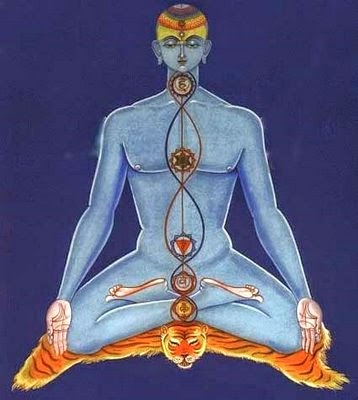
What is Pranayama?


Prana is Vyashti, when the individual is concerned. The sum total of the cosmic energy or cosmic Prana is Hiranyagarbha who is known as the floating ‘Golden-Egg’. Hiranyagarbha is Samashti Prana. One match stick is Vyashti (single). The whole match box is Samashti. A single mango-tree is Vyashti. The whole mango grove is Samashti. The energy in the body is Prana. By controlling the motion of the lungs or respiratory organs, we can control the Prana that is vibrating inside. By control of Prana, the mind can be easily controlled, because the mind is fastened to the Prana, like the bird to the string. Just as the bird that is tied to a post by a string, after flying here and there, finds its resting place in the post, so also this mind-bird after running hither and thither, in various sensual objects, finds its resting place during deep sleep in the Prana.

Pranayama (According to the Gita) :

Apane juhvati pranam pranepanam tathapare; Pranapanagatee ruddhva pranayamaparayanah (Gita, Ch. IV-29.). Others offer Prana (outgoing breath) in Apana (incoming breath) and Apana in Prana, restraining the passage of Prana and Apana, absorbed in Pranayama. Pranayama is a precious yajna (sacrifice). Some practise the kind of Pranayama called Puraka (filling in). Some practise the kind of Pranayama called Rechaka (emptying). Some are engaged in the practice of Pranayama called Kumbhaka, by impeding the outward passage of air, through the nostrils and the mouth, and by impeding the inward passage of the air, in the opposite direction.

Pranayama (According To Sri Sankaracharya) :

“Pranayama is the control of all life-forces by realising naught but Brahman in all things as the mind, etc.

“The negation of the Universe is the outgoing breath. The thought: ‘I am Brahman’ itself is called the incoming breath.

The permanence of that thought thereafter is the restrained breath. This is the Pranayama of the wise, while the pressing of the nose is only for the unknowing.” (Aparokshanubhuti, 118-120). Pranayama (According to Yogi Bhusunda)

Bhusunda says to Sri Vasishtha: “In the cool lotus of the heart within this visible tenement of flesh composed of the five elements, there are two Vayus, viz., Prana and Apana, commingled in it. For those who tread smoothly and without any or the slightest efforts, the path of these two Vayus, will become the sun and the moon themselves in the heart—Akasa, and will rove in the Akasa and yet be animating and carrying their fleshy-tabernacle. These Vayus will go up and down to higher and lower states. They are of the same nature in the waking, dreaming and dreamless sleeping state, and permeate all throughout. I am moving in the direction of those two Vayus and have rendered nil all my Vasanas in the waking state lit unto those of the dreamless sleeping state. Divide a filament of the lotus-stalk into a thousand times and you will find these Vayus more subtle than that. Hence it is difficult for me to treat about the nature of these Vayus and their vibrations. Of these, Prana does ceaselessly vibrate in this body, with an upward motion, both externally and internally, while Apana having the same fluctuating tendency, vibrates both external and internal to the body having a downward motion. It will be beneficial if the Prana exhaled to the extent of 16 digits, is inhaled to the same extent. Only 12 digits are inhaled ordinarily. Those who have brought to experience—viz., the equalisation of Prana in exhalation and inhalation will enjoy infinite bliss. “Now hear about the characteristics of Prana. The inhalation to the length of 12 digits of the Prana which has been exhaled, is called (the internal) Puraka (inhalation). This also is called the internal (Puraka), when Apana Vayu re-enters the body from outside without any effort. When Apana Vayu ceases to manifest itself and Prana gets absorbed in the heart, then the time occupied in such a state is (internal) Kumbha. Yogins are able to experience all these. When the Prana in the Akasa of the heart manifests itself externally (to the heart within) in diverse aspects without any affliction to the mind then it is called (the external) Rechaka (exhalation). When the externally fluctuating Prana enters the nose and stops there at its tip, then it is called the external Puraka. But when it is passing from the tip of the nose it goes down 12 digits. Then also it is called the external Puraka. When Prana goes arrested without and Apana within, then it is called the external Kumbhaka. When the shining Apana Vayu takes an upward bent within, then it is styled the external Rechaka. All these practices lead to moksha. Therefore they should ever be meditated upon. Those who have understood and practised well all the external and internal Kumbhakas and others, will never be reborn.

“All the eight courses, I have given out before, are capable of yielding Moksha. They should be practised both day and night. Those who are associated with these practices smoothly and control their minds by not letting them run in other directions, will in course of time attain Nirvana. Such practitioners will never thirst after material pleasures. They will ever be in their uniform practice, whether walking, standing, waking, dreaming or sleeping.

“Prana, having flown out, will again be absorbed in the heart having run back 12 digits. Similarly will Apana be absorbed in the heart, having issued out of the heart and running back 12 digits to it. Apana being the moon, will cool the whole body in its passage. But Prana being the sun, will generate heat in the system and cook or digest everything in it. Will pains arise in one who has reached that supreme state, where the Kalas (rays) of Apana the moon, are drowned by Prana the sun? Will rebirth arise in one who has reached that powerful seat, when the Kalas of Prana, the sun, are devoured by Apana the moon? These will arrest at once the seven births of those who reach that neutral state where they find Apana Vayu consumed by Prana and vice versa. I eulogise that Chidatma, who is in that intermediate state, where Prana and Apana are absorbed in one another. I meditate ceaselessly upon that Chidatma, who is in the Akasa, directly in front, at the end of my nose, where Prana and Apana both become extinct. Thus it is through this path of Prana’s control, that I attained the supreme and immaculate Tattva, devoid of pains.”

Control of Breath:

The first important step is to master the Asana of posture or to control the body. The next exercise is Pranayama. Correct posture is indispensably requisite for the successful practice of Pranayama. An easy comfortable posture is Asana. That pose is the best which continues to be comfortable for the greatest length of time. Chest, neck, and head must be in one vertical line. You should not bend the body either forwards or laterally, i.e., either on the right or left side. You should not sit crooked. You should not allow the body to collapse. You must not bend the body either forwards or backwards. By regular practice the mastery over the pose will come by itself. Fatty people will find it difficult to practise the Padma Asana or the Lotus Pose. They can sit on the Sukha Asana (comfortable pose) or Siddha Asana (perfected pose). You need not wait for practising Pranayama till you get full mastery over the Asana. Practise Asana and side by side you can practise Pranayama also. In course of time, you will acquire perfection in both. Pranayama can also be practised by sitting in the chair erect.

In Bhagavad-Gita, the Immortal Song of Lord Krishna, you will find a beautiful description of seat and pose: “In a pure secret place by himself established in a fixed seat of his own, neither too high nor too low, with cloth, black antelope-skin and Kusa grass one over the other, there, making the mind one-pointed, with thought and the functions of the senses controlled, steady on his seat, he should practise Yoga for the purification of the Self, holding the body, head and neck erect, firm, gazing steadily at the tip of the nose without looking around” (Ch. VI—10,11, & 12).

Pranayama is the control of the Prana and the vital forces of the body. It is regulation of the breath. This is the most important step. The aim of Pranayama is the control of Prana. Pranayama begins with the regulation of the breath for having control over the life-currents or inner vital force. In other words, Pranayama is the perfect control of the life-currents through control of breath. Breath is external manifestation of the gross Prana. A correct habit of breathing must be established by the regular practice of Pranayama. In ordinary worldly persons the breathing is irregular. If you can control the Prana you can completely control all the forces of the Universe, mental and physical. The Yogi can also control the Omnipresent manifesting power out of which all energies take their origin, whether concerning magnetism, electricity, gravitation, cohesion, nerve-currents, vital forces or thought-vibrations, in fact the total forces of the Universe, physical and mental.

If one controls the breath or Prana, the mind also is controlled. He who has controlled his mind has also controlled his breath. If one is suspended, the other is also suspended. If the mind and Prana are both controlled one gets liberation from the round of births and deaths and attains immortality. There is intimate connection between the mind, Prana and semen. If one controls the seminal energy, the mind and Prana are also controlled. He who has controlled his seminal energy has also controlled his Prana and mind.

He who practises Pranayama will have good appetite, cheerfulness, handsome figure, good strength, courage, enthusiasm, a high standard of health, vigour and vitality and good concentration of mind. Pranayama is quite suitable for the Westerners also. A Yogi measures the span of his life not by the number of years but by the number of his breaths. You can take in a certain amount of energy or Prana from the atmospheric air along with each breath. Vital capacity is the capacity shown by the largest quantity of air a man can inhale after the deepest possible exhalation. A man takes fifteen breaths in a minute. The total number of breaths comes to 21,600 times per day. 


Please help spread hinduism by sharing these articles on facebook

Importance and Benefits of Pranayama


“The illusory Samsaric Vasana that has arisen through the practice of many lives, never perishes except through the practice of Yoga for a long time. It is not possible on the part of one to control the mind by sitting up again and again except through the approved means” (Muktikopanishad).

"How could Jnana, capable of giving moksha, arise certainly without Yoga? And even Yoga becomes powerless in securing Moksha when it is devoid of Jnana. So the aspirant after emancipation should practise (firmly) both Yoga and Jnana," (Yogatattva Upanishad). “Tatah kshiyate prakasavaranam—Thence the covering of the light is destroyed” (Yoga Sutras—II-52). Tamas and Rajas constitute the covering or veil. This veil is removed by the practice of Pranayama. After the veil is removed, the real nature of the soul is realised. The Chitta is by itself made up of the sattvic particles, but it is enveloped by Rajas and Tamas, just as the fire is enveloped by smoke.

There is no purificatory action greater than Pranayama. Pranayama gives purity and the light of knowledge shines. The Karma of the Yogi, which covers up the discriminative knowledge is destroyed as he practises Pranayama. By the magic panorama of desire, the essence, which is luminous by nature is covered up and the Jiva or individual soul is directed towards vice. This Karma of the Yogi which covers up the Light and binds him to repeated births, becomes attenuated by the practice of Pranayama every moment and is destroyed eventually. The afflictions and sins constitute the cover according to Vachaspati.

Manu says: “Let the defects be burnt up by Pranayama.” Vishnu Purana speaks of Pranayama as an accessory to Yoga: “He who wants the air known as Prana by practice is said to have secured Pranayama.”

“Dharanasu cha yogyata manasah—The mind becomes fit for concentration” (Yoga Sutras, II-53). You will be able to concentrate the mind, nicely after this veil of the light has been removed. The mind will be quite steady like the flame in a windless place as the disturbing energy has been removed. The word Pranayama is sometimes used collectively for inhalation, retention and exhalation of breath and sometimes for each of these severally. When the Prana Vayu moves in the Akasa-Tattva, the breathing will be lessened. At this time it will be easy to stop the breath. The velocity of the mind will be slowly lessened by Pranayama. It will induce Vairagya.

If you can suspend one inch or digit of breath inside, you will obtain the powers of foretelling; if you can suspend two inches within, you will get the power of thought-reading, for suspending the breath for three inches, levitation; for four inches, psychometry, clairaudience, etc; for five inches, moving about unseen by anybody in the world; for six inches, the power of ‘Kaya Siddhi’; for seven inches, entering the body of another man (Parakaya Pravesa); for eight inches, the power to remain always young; for nine inches, the power to make Devas to work as your servants; for ten inches Anima, Mahima and other Siddhis; and for eleven inches, you will attain oneness with Paramatman. When through great practice the Yogi can perform Kumbhaka for full three hours, then he can balance himself on his thumb. He undoubtedly attains all kinds of Siddhis. Just as fire destroys the fuel, so also Pranayama destroys the bundles of sins. Pratyahara makes the mind calm. Dharana steadies the mind. Dhyana makes one forget the body and the world. Samadhi brings infinite Bliss, Knowledge, Peace and Liberation.

During Yogic Samadhi, the flame of the Yogagni (fire of Yoga) extending from navel to the head melts the Amrita in the Brahmarandhra. The Yogi drinks this with joy and ecstasy. He can remain without food and drink for months by drinking this Yogic nectar alone.

The body becomes lean, strong and healthy. Too much fat is reduced. There is lustre in the face. Eyes sparkle like a diamond. The practitioner becomes very handsome. Voice becomes sweet and melodious. The inner Anahata sounds are distinctly heard. The student is free from all sorts of diseases. He gets established in Brahmacharya. Semen gets firm and steady. The Jatharagni (gastric fire) is augmented. The student becomes so perfect in Brahmacharya that his mind will not be shaken even if a fairy tries to embrace him. Appetite becomes keen. Nadis are purified. The Vikshepa is removed and the mind becomes one-pointed. Rajas and Tamas are destroyed. The mind is prepared for Dharana and Dhyana. The excretions become scanty. Steady practice arouses inner spiritual light, happiness and peace of mind. It makes him an Urdhvareto-Yogi. Advanced students only will get all the other Siddhis mentioned above.

The mind of a man can be made to transcend ordinary experience and exist on a plane higher than that of reason known as superconscious state of concentration and get beyond the limit of concentration. He comes face to face with facts which ordinary consciousness cannot comprehend. This ought to be achieved by proper training and manipulation of the subtle forces of the body so as to cause them to give, as it were, an upward push to the mind into the higher regions. When the mind is so raised into the superconscious state of perception, it begins to act from there and experiences higher facts and higher knowledge. Such is the ultimate object of Yoga, which can be achieved by the practice of Pranayama. The control of the vibratory Prana means to a Yogi, the kindling of the fire of supreme knowledge, the realisation of the Self.

Special Instructions for Practicing Pranayama

1. In the early morning, answer the calls of nature and sit for the practice. Practise Pranayama, in a dry well-ventilated room. Pranayama requires deep concentration and attention. It is always better to have the practice in a steady sitting posture. Do not keep anyone by your side to avoid distraction of your mind.

2. Before you sit for Pranayama practice, thoroughly clean the nostrils well. You can take a small quantity of fruit-juice or a small cup of milk or coffee even before the practice. When you finish the practice take a cup of milk or light tiffin after 10 minutes.

3. Have one sitting only in the morning during summer. If there is heat in the brain or head, apply Amla oil or butter on the head before you take your bath. Take Misri Sherbat by dissolving sugar candy in water. This will cool your whole system. Do Sitali Pranayama also. You will not be affected by the heat.

4. Strictly avoid too much talking, eating, sleeping, mixing with friends and exertion. “Verily Yoga is not for him who eateth too much, nor who abstaineth to excess, is addicted to too much sleep nor even to wakefulness” (Gita VI-16). Take a little ghee with rice when you take your meals. This will lubricate the bowels and allow Vayu to move downwards freely.

5. “Mitaharam vina yastu yogarambham tu karayet, Nanaroga bhavettasya kinchid yogo na sidhyati—Without observing moderation of diet, if one takes to the Yoga practices, he cannot obtain any benefit but gets various diseases” (Ghe.S. Chap. V-16).

6. Perfect celibacy for six months or one year will doubtless enable you to acquire rapid progress in the practice and in spiritual advancement. Do not talk with ladies. Do not laugh and joke with them. Shun their company entirely. Without Brahmacharya and dietetic regulations if you practise Yogic exercises, you will not get maximum benefit in the spiritual practices. But, for ordinary health you can practise mild exercises.

7. Be regular and systematic in your practice. Never miss a day. Stop the practice when you are ailing seriously. Some people twist the muscles of the face when they do Kumbhaka. It should be avoided. It is a symptom to indicate that they are going beyond their capacity. This must be strictly avoided. Such people cannot have a regulated Rechaka and Puraka.

8. Obstacles in Yoga: “Sleeping in day time, late vigil over night, excess of urine and faeces, evil of unwholesome food and laborious mental operation with Prana.” When one is attacked by any disease, he says that the disease is due to the practice of Yoga. This is a serious mistake.

9. Get up at 4 a.m. Meditate or do japa for half an hour. Then do Asanas and Mudras. Take rest for 15 minutes. Then do Pranayama. Physical exercises can be conveniently combined with Asanas. If you have sufficient time at your disposal, you can have it after finishing all the Yogic exercises and meditation. Pranayama can also be performed as soon as you get up from bed just before Japa and meditation. It will make your body light and you will enjoy the meditation. You must have a routine according to your convenience and time.

10. Maximum benefit can be derived if Japa also is done during the practice of Asanas and Pranayama.

11. It is always better to start Japa and meditation in the early morning at 4 a.m., as soon as you get up from bed. At this time the mind is quite calm and refreshed. You can have good concentration.

12. Vast majority of persons waste their precious time in the early morning in answering the calls of nature for half an hour and washing their teeth for another half an hour. This is bad. Aspirants should try to defecate within 5 minutes and cleanse their teeth within 5 minutes. If the bowels are constipated, have vigorous practice of Salabha, Bhujanga and Dhanur Asanas for 5 minutes as soon as you get up from bed. If you are habituated to answer the call of nature, late, you can do so after finishing the Yogic exercises.

13. First do Japa and meditation. Then you can take to Asana and Pranayama exercises. Then finish the course of practice by another short sitting in meditation.

14. AS there is always some drowsiness when you get up from bed, it is desirable to do some Asanas and a little Pranayama for five minutes just to drive off this drowsiness and to make you fit for meditation. The mind gets one-pointed after the practice of Pranayama. Pranayama, though it concerns with the breath, gives good exercise for various internal organs and the whole body.

15. The general order of doing Kriyas is: First do all Asanas, then Mudras, then Pranayama and then Dhyana. Since the early morning time is suitable for meditation, you can follow this order: Japa, Meditation, Asanas, Mudras and Pranayama. This is a better way. You can follow the order which is suitable to you. After doing Asanas, take rest for five minutes and then begin Pranayama.

16. Some Hatha Yogic books interdict cold bath in the early morning. Probably the reason may be that one may catch cold or develop any complaint of the lungs, if he takes cold bath at 4 a.m. particularly in cold places like Kashmir, Mussoorie, Darjeeling, etc. There is no restriction in hot places. I am always in favour of cold baths before one starts the Yogic practices as it is refreshing and stimulating. It drives off drowsiness. It brings in equilibrium of circulation of blood. There is a healthy flow of blood towards the brain.

17. Asanas and Pranayama remove all sorts of diseases, improve health, energise digestion, invigorate the nerves, straighten the Sushumna Nadi, remove Rajas and awaken Kundalini. Practice of Asanas and Pranayama bestows good health and steady mind. As no sadhana is possible without good health and as no meditation is possible without a steady mind, Hatha Yoga is of immense use for Dhyana Yogins, Karma Yogins, Bhaktas and Vedantins as well.

18. The maintenance of the body is impossible without Asanas or any kind of physical exercises or activities. Even an orthodox Vedantin is an unconscious Hatha Yogi. He practises some kind of Asana daily. He practises Pranayama also unconsciously because during meditation, Pranayama comes by itself.

19. Whenever you feel uneasy, depressed or dejected, practise Pranayama. You will be at once filled with new vigour, energy and strength. You will be elevated, renovated and filled with joy. Do this and try. Before you begin to write something, an essay, an article or a thesis, do Pranayama first. You will bring out beautiful ideas and it will be an inspiring, powerful and original production.

20. Be regular in the practice. Regularity in the practice is very necessary if one wants to realise the maximum benefits of Asanas and Pranayama. Those who practise by fits and starts will not derive much benefit. Generally people practise for two months in the beginning with great enthusiasm and leave off the practice. This is a sad mistake. They always want a Yogic teacher by their side. They have got the effeminate leaning mentality. They are lazy, torpid and slothful.

21. People do not want to remove Mala (impurity) by selfless service and Vikshepa by Yogic practices. They at once jump to awaken the Kundalini and raise Brahmakara Vritti. They will only break their legs. Those who attempt to awaken the Kundalini by Asanas and Pranayama, should have purity in thought, word and deed. They should have mental and physical Brahmacharya. Then only they can enjoy the benefits of awakening the Kundalini.

22. Sow the seed of spirituality in your young age. Do not waste Virya. Discipline the Indriyas and mind. Do Sadhana. When you become old, it will be difficult for you to do any rigid Sadhana. Therefore be on the alert during your teens; you will see for yourself in a short time the particular benefits you derive from particular kinds of Sadhana.

23. When you advance in spiritual practices, you must observe strict Mouna (vow of silence) for 24 hours continuously. This must be continued for some months also. Everyone should select a course of few exercises in Asana, Pranayama and meditation according to one’s temperament, capacity, convenience and requirement.

24. It is quite possible for a man to practise celibacy, albeit there are various sorts of temptations and distractions. A well-disciplined life, study of scriptures, Satsanga, Japa, Dhyana, Pranayama, Sattvic and moderate diet, daily introspection, and enquiry, self-analysis and self-correction, Sadachara, practice of Yama, Niyama, physical and verbal Tapas, all will pave a long way in the attainment of this end. People have irregular, unrighteous, immoderate, irreligious, undisciplined life. Hence they suffer and fail in the attainment of the goal of life. Just as the elephant throws sand on its own head, so also they themselves bring difficulties and troubles on their own heads on account of their foolishness.

25. Do not shake the body unnecessarily. By shaking the body often the mind also is disturbed. Do not stretch the body every now and then. The Asana should be steady and firm as a rock when you do Pranayama, Japa and meditation.

26. You must find out for yourself according to your health and constitution what sort of dietetic regulation will suit and what particular Pranayama will exactly help you. Then only you can safely proceed with your Sadhana. First read all the instructions of the various exercises given in this book from the beginning to the end. Clearly understand the technique. If you have any doubts, just ask any Yogic student to demonstrate and then practise it. This is the safest method. You should not select any one of the exercise at random and begin to practise it in a wrong way.

27. In all the exercises I have suggested mantra ‘OM’ as the time-unit. You can have your Guru Mantra, Rama, Siva, Gayatri or mere number as the time-unit according to your inclination. Gayatri or OM is the best for Pranayama. In the beginning you must observe some time-unit for Puraka, Kumbhaka and Rechaka. The time-unit and the proper ratio comes by itself when you do the Puraka, Kumbhaka and Rechaka as long as you can do it comfortably. When you have advanced in the practice, you need not count or keep any unit. You will be naturally established in the normal ratio through force of habit.

28. For some days in the beginning you must count the number and see how you progress. In the advanced stages, you need not distract the mind in counting. The lungs will tell you when the required number is finished.

29. Do not continue the Pranayama when you are fatigued. There must be always joy and exhilaration of spirit during and after the practice. You should come out of the practice fully invigorated and refreshed. Do not bind yourself by too many rules (Niyamas).

30. Do not take bath immediately after Pranayama is over. Take rest for half an hour. If you get perspiration during the practice, do not wipe it with a towel. Rub it with your hands. Do not expose the body to the chill draughts of air when you perspire.

31. Always inhale and exhale very slowly. Do not make any sound. In Pranayamas like Bhastrika, Kapalabhati, Sitali and Sitkari, you can produce a little mild or the lowest possible sound.

32. You should not expect the benefits after doing it for 2 or 3 minutes only for a day or two. At least you must have 15 minutes daily practice in the beginning regularly for days together. There will be no use if you jump from one exercise to another everyday. You must have a particular exercise for your daily Abhyasa, which you should improve to a high degree. Other exercises of course, you can have for occasional practice along with the daily exercise. You must have Bhastrika, Kapalabhati and ‘Easy Comfortable Pranayama’ for your daily practice; and Sitali, Sitkari, etc., can be practised occasionally.

33. The Puraka is otherwise known as ‘Nissvasa’ and Rechaka is known as ‘Uchhvasa’. The mental process in Kevala Kumbhaka is called ‘Sunyaka’ form of breath regulation. Steady, systematic practice and gradual increase of Kumbhaka is known as ‘Abhyasa Yoga’, swallowing of air and living on this air alone is known as ‘Vayubhakshana’.

34. The author of Sivayoga Dipika describes three kinds of Pranayama: Prakrita, Vaikrita and Kevala Kumbhaka. “If the Prana is in the form of breath inhaled and exhaled, on account of its natural quality of going out and coming in, the Pranayama is known as Prakrita. If the Prana is restrained by the threefold means of throwing out, taking in and stopping the breath in accordance with the rules prescribed in the Sastras, it is called Vaikrita or artificial. But with great men who have risen above these two kinds of restraining breath, the sudden restraining of the vital currents directly (without inspiration and expiration), is Kevala Kumbhaka. Prakrita Pranayama belongs to Mantra Yoga. Vaikrita belongs to Laya Yoga.”

35. “That is called Kumbhaka (cessation of breath) when there is neither expiration nor inspiration and the body is motionless, remaining still in one state. Then he sees forms like the blind, hears sounds like the deaf and sees the body like wood. This is the characteristic of one who has attained quiescence.”

36. Patanjali does not lay much stress on practice of different kinds of Pranayama. He mentions: “Exhale slowly, then inhale and retain the breath. You will get a steady and calm mind.” It is only the Hatha Yogins who developed Pranayama as a science and have mentioned various exercises to suit different persons.

37. “Spread a tiger-skin or a deer-skin or a fourfold blanket. Over this spread a piece of white cloth. Then sit for the Pranayama practice facing the North.”

38. Some would take the order as exhaling, inhaling and retaining; others as inhaling, retaining and exhaling. The latter is more common. In Yajnavalkya, we find the different kinds of breath regulation mentioned in the order of Puraka, Kumbhaka and Rechaka; whereas, in Naradiya text we have them in the order of Rechaka, Puraka and Kumbhaka. The two are to be regulated as optional alternatives.

39. A Yogi should always avoid fear, anger, laziness, too much sleep or waking and too much food or fasting. If the above rule be well strictly practised, each day, spiritual wisdom will arise of itself in three months without doubt; in four months, he sees the Devas; in five months he knows or becomes a Brahmanishtha; and truly in six months he attains Kaivalya at will. There is no doubt.

40. A neophyte should do Puraka and Rechaka only without any Kumbhaka for some days. Take a long time to do Rechaka. The proportion for Puraka and Rechaka is 1:2.

41. Pranayama in its popular and preparatory form may be practised by every one in any posture whatsoever, sitting or walking; and yet is sure to show its benefits. But to those who practise it in accordance with the specific methods prescribed, fructification will be rapid.

42. Gradually increase the period of Kumbhaka. Retain for 4 seconds in the first week, for 8 seconds in the second week, for 12 seconds in the third week and so on, till you are able to retain the breath to your full capacity.

43. Common-sense or Yukti should be used throughout your practice. If one kind of exercise is not agreeable to your system, change it after due consideration or consultation with your Guru. This is Yukti. Where there is Yukti, there is Siddhi, Bhukti and Mukti (perfection, enjoyment and salvation).

44. You must so nicely adjust the Puraka, Kumbhaka and Rechaka that you should not experience the feeling of suffocation or discomfort at any stage of Pranayama. You should never feel the necessity of catching hold of a few normal breaths between any two successive rounds. The duration of Puraka, Kumbhaka and Rechaka must be properly adjusted. Exercise due care and attention. Matters will turn to be successful and easy.

45. You must not unnecessarily prolong the period of exhalation. If you prolong the time of Rechaka, the following inhalation will be done in a hurried manner and the rhythm will be disturbed. You must so carefully regulate the Puraka, Kumbhaka and Rechaka that must be absolutely comfortable and perform not only one Pranayama but also the full course or required rounds of Pranayama. Experience and practice will make you alright. Practice makes one perfect. Be steady. Another important factor is that you must have efficient control over the lungs at the end of Kumbhaka to enable you to do the Rechaka smoothly and in proportion with the Puraka.

46. Suryabheda and Ujjayi produce heat. Sitkari and Sitali are cooling. Bhastrika preserves normal temperature. Suryabheda destroys excess of wind; Ujjayi phlegm; Sitkari and Sitali bile; and Bhastrika all the three.

47. Suryabheda and Ujjayi must be practised during winter. Sitkari and Sitali must be practised in summer. Bhastrika can be practised in all seasons. Those persons whose bodies are hot even in winter can practise Sitali and Sitkari during winter season.

48. Goal of life is self-realisation. “This is brought about by means of the subjugation of the body and the senses, the service to a good Guru, the hearing of Vedantic doctrine and constant meditation thereon” (Niralamba Upanishad). “If you are really sincere and if you wish to have a quick, sure success, you must have a systematic routine for Asana, Pranayama, Japa, Meditation, Svadhyaya, etc. You must be very careful in keeping up Brahmacharya. Effective means to control the mind are the attainment of spiritual knowledge, association with the wise, the entire abdication of all Vasanas and control of Prana” (Muktikopanishad).

49. Once again I will tell you that Asana, Pranayama, Japa, Dhyana, Brahmacharya, Satsanga, solitude, Mouna, Nishkama Karma are all absolutely necessary for spiritual attainments. One can hardly obtain perfection in Raja Yoga without Hatha Yoga. At the end of Kumbhaka you should withdraw the mind from all the objects. By gradual practice you will be established in Raja Yoga.

50. Some students who are studying Vedantic books think that they are Jnanis and they ignore Asanas, Pranayama, etc. They also should practise these, till they are perfect in Shat-Sampat of the Sadhana-Chatushtaya—Sama, Dama, etc.,—the preliminary qualifications of Jnana Yoga.

51. Do not hesitate. Do not be waiting to get a Guru who will sit by your side and watch you daily for a long time. If you are sincere, regular and systematic and if you follow rules and instructions of this book very carefully, there will be no trouble at all. You will undoubtedly get success. Slight errors may crop up in the beginning, it does not matter. Do not unnecessarily be alarmed. Do not give up the practice. You will yourself learn how to adjust. Common-sense, instinct, the shrill inner voice of the soul will help you in the path. Everything will come out smoothly in the end. Start the practice this very second in right earnest and become a real Yogi. 

ब्रह्मलीन प. पु. श्री स्वामी सदानंद तीर्थ जी महाराज


ब्रह्मलीन प. पु. श्री स्वामी सदानंद तीर्थ जी महाराज 

Swami Sadanand Thirth Ji Maharaaj 

गुरु बनना बहुत भयानक है - स्वामी शिवोमतीर्थ जी महाराज


पूरा लेख पढ़ने के लिए इस लिंक पर जाएँ ... ( To read full article, please go through following link):

Download

Shaktipat...

The Primordial Energy of Consciousness gives birth to the universe, nurtures it, and bestows manifold spiritual blessings. This Evolutionary Energy dwells within all beings as Kundalini. Great Spiritual Preceptors have the rare ability to awaken this Divine Energy and lead seekers to the experience of their own true essence - Being, Consciousness and Bliss. This is the path of Mahashakti Yoga. The uniqueness of this Yoga is that it includes all other Yogas. The type of Yoga exactly suited to the seeker occurs spontaneously. This is propitiated from within by the workings of the awakened Kundalini Shakti Energy.

There are many spiritual practices that are generally recommended, including maintaining subjective awareness, mantra repetition, meditation, chanting, satsang and living the teachings. These are activities that you can do. Yet, around Great Beings, something else happens. You are done! Just as a candle lights another candle, the master injects a current of Divine Power (Shakti) into the subtle body of the aspirant. This ignites or releases their inner prana (life force). This prana then works freely, generating the various yogic processes - asanas, mudras, pranayamas, etc. This is known as Shaktipat (descent of Grace) or the awakening of Kundalini. It is initiation of the highest order.

There is no conscious effort or sense of doership involved in these spontaneous yogic processes. One watches as a witness. The workings of this Energy thin the Self-limiting impressions of past actions stored in the mind stuff by converting them into Kriyas (movements). With this, the binding tendencies that limit one's consciousness are lifted. Whatever path one may follow, it is inevitably through the release of prana that one enters deep meditation and ultimately, Union with God.

The importance of the Guru cannot be overemphasized on this journey. First, because it is extremely rare for an aspirant to be able to awaken this indwelling Divine Energy, and second, because after Its awakening, various purification processes occur where the stabilizing influence of the Guru is very important.

The Secrets of Shaktipat

Precis: The idea of Shaktipat is almost unknown in the West. It is an ancient method of awakening and activating the Kundalini in the shortest possible time. In most cases it is instantaneous and effortless. Automatic movements in the body — ranging from jerking and making various sounds to spontaneously assuming Hatha Yoga asanas — reverse the flow of vital fluids, which enrich and prepare the brain to receive enlightenment. Accumulated karma is released and calmness, or inner contentment and synchronicity with life prevail. In this groundbreaking article, the author of Kundalini for Beginners reveals the secrets of this ancient practice.

THE SECRETS OF SHAKTIPAT

By Ravindra Kumar, Ph.D.

SHAKTI AND KUNDALINI

The term "Shakti" is very popular today, but is usually misunderstood. Shakti can be understood by thinking about electricity. The fan will function as long as electricity powers it; the moment electricity is withdrawn, it stops working and become useless. The same is true of humans. We are alive as long as Shakti powers us. The moment Shakti life force withdraws, we die.

When Cosmic Energy or Universal Shakti comes into contact with Its residual Shakti, called Kundalini, hitherto lying dormant in the individual, It awakens, activating the sleeping Kundalini. The awakening of Kundalini is a sure sign of active Shakti (although even in its inactive state it still supplies the energy that keeps us alive). The individual consciously feels the oneness of one’s own Shakti Kundalini with the Universal Shakti, just as a drop of water feels the union when it contacts the ocean. With the rising of the serpent power or Kundalini comes the intuitive knowledge that there is no death. When this happens, the inner state of the aspirant quickly changes; there is calmness, an inner contentment, and a synchronicity with life not present before. Accumulated karma from other lifetimes gradually loses its potency until all karmic debt dissolves. The practitioner then experiences Shakti active within him/her as an all-encompassing, expansive energy. The body of the practitioner becomes the entire cosmos as the cosmos and the practitioner complement each other. Practitioners experience a unified, eternal flow of life force or energy circulating between them and Universal Consciousness. The physical limits of the practitioner now extend to the cosmic level and all distances come within his/her reach; one's third eye is opened, so that other dimensions can be seen and travel to higher realms becomes a reality. One begins to live fully and become totally awake for the first time. At this level, the Self-Realized person can do anything on earth except the Divine processes of creation, preservation and destruction. A kind of "mechanical switch" develops enabling the person to live either in this world or another world, if and when one likes.

Traditionally, Kundalini energy can be awakened through three main practices:

  • Asanas (yogic postures), mudras (hand positions), and pranayama (breath-control exercises)
  • Grace of the Guru
  • The accumulated results of devotional practices through several lifetimes.

For the first set of practices, there are several rules to be adhered to for the energy to rise. One has to learn unnatural yogic postures, mudras, and breath control practices of Hatha Yoga. These may not be easy for everyone, and having embarked on the path of learning these postures and mudras there is no certainty how long the person will have to practice before Kundalini rises and the person "awakes." For this reason finding a Guru and receiving his/her grace is helpful; then there is no need for rules or regulations.

Awakening Kundalini through the grace of a Guru is traditionally seen as the best and most natural way of stirring this energy. When Kundalini energy awakens through the grace of the Guru, yogic postures, mudras, and breath control exercises do not need to be performed in an unnatural way. Rather, everything unfolds by itself according to the individual's karmic history. Awakening through the grace of the Guru is sure and quick, although finding a Guru is not so easy. When the consciousness of the inner and the external Guru is integrated, the external or physical Guru is not needed for awakening. Where it is not possible to receive grace from a Guru then the first set of practices can work but may be slower.

Using examples we can compare the three methods of awakening. The first method is comparable to someone who works very hard, tolerates the sun and heat of the day, working relentlessly to earn a living. The second method is similar to receiving great wealth from a rich person through an act of compassion. The third method is comparable to suddenly discovering wealth on the way home or while sitting at home, it is instant and without too much effort. Whatever the method, those who have had successful Kundalini Awakening can be recognized by their healthy body, happy countenance, appearance of anahat-shabd or the "inner sound" known as AUM or WORD, beautiful, peaceful eyes, becoming an urdhvareta or one in whom the reversal of the flow of semen has taken place or the one who has attained the power of retaining the semen, and the purification of body and nerves.

In my own experience, when the Kundalini awakened I felt extra activities in my testicles, a squeezing sensation that seemed to be directing some fluid upward to the brain through unseen capillaries. Sexual arousal passes on to other parts of the body as sublimated energy. There is a cooling down and an upsurge of pure love for every one (Kumar 2000, p. 83). Swami Muktananda and Pundit Gopi Krishna have described similar experiences in their books. Female practitioners have reported similar experiences, for example, a college professor and Siddha-Yoga practitioner, Karen felt energy rocket up from the first chakra (Mooladhara) at times, causing her whole body to vibrate and shake. In the case of Beth, from Arkansas, there was often a sucking sensation around the cervix, as if vaginal fluid was needed by the energy (Greenwell 1990, p. 203). Thus, whether the person is male or female, it seems that vital sexual fluids are used to enrich and strengthen the brain making it strong enough to receive enlightenment.

SHAKTIPAT OR KUNDALINI MAHA-YOGA

Kundalini Maha-Yoga is a self-proven and self-perfecting spiritual practice. The power of Kundalini can cause an initiate to perform kriyas (automatic movements) through the power of Kundalini itself. The force of the Kundalini is such that the body performs these asanas unconsciously. Another name is Siddha-yoga, or the self-proven path of meditation. In all aspects, body, mind and intellect, Shakti uses Kundalini to perform the meditation. The initiate is drawn into flowing with the energy and must surrender to the process. When and how Kundalini-Shakti manifests is the work of the divine power (Shakti) Itself. To practice Siddha Yoga one must allow the divine power the opportunity to perform the meditation and yogic postures without interference.

Traditionally, it is believed that without initiation it is difficult to realize the fruits of knowledge, meditation, yoga, japa (chanting), tapa (austerities), devotion, karma, and dharma (religious duties). Kundalini Maha-Yoga (Shaktipat) as a path of initiation is different from other paths of meditation and/or initiation, because on other paths one has to learn certain tasks or master specific techniques. Practitioners are responsible for doing meditation or they may have to learn about different stages in meditation. Ceremonies may have to be performed or different yogic postures or asanas assumed, or they may have to struggle to eject undesirable thoughts from their mind.

In Shaktipat it is not necessary to do any of these things. All the person has to do is sit with a complete sense of surrender to the present moment and experience. To achieve Shaktipat a person should be warm and welcoming to all thoughts or emotions as they occur, allowing inner life to flow effortlessly through the body without interference or judgement. Then, according to the nature and state of the spiritual consciousness of each initiate, different meditative experiences — emotional, intellectual, or creative in nature — will occur by themselves.

GURU AND INITIATE

In the Shaktipat tradition, a Guru is a person who can awaken Kundalini energy in another. The one receiving the energy from the Guru is the initiate. A person in whose presence or by whose touch one feels inner happiness and bliss is a Guru. In fact, one's Atman or Soul is the real and ultimate Guru — there is none above Atman. But this concept is too abstract for many on the spiritual path which is why they take a physical Guru. One may adopt a Guru until the realization of Atman (the inner Guru) takes place. Sometimes one is dissatisfied with the Guru. There is always the freedom to choose another, but this should only be done when following the same Guru doesn't feel right intuitively anymore. A Guru is there to reveal and dissolve the ego, which is never easy. Vigilance as to why there is discomfort working with the Guru is vital, because when the ego feels threatened it will find reasons to leave the Guru to stop any further spiritual advancement. Just as a bee goes from one flower to another in search of honey, a practitioner can also go from Guru to Guru in search of knowledge but one needs to be aware that superficial flitting about will not aid spiritual unfoldment.

In an initiation, if the initiate does not feel inner happiness or bliss — and certainly if one year after initiation (and having rigorously followed instructions and been vigilant with the ego) one does not experience bliss and intuitive knowledge — then it may be time to look for another Guru. Finding a self-declared Guru who is ready to work for money is easy; finding an authentic Guru is difficult.

The aspirant needs to be prepared for the initiation, too. This means the mind and body must be made as strong as possible. If cement is put on mud, its utility is weak like mud; but when applied to brick, it becomes as strong as stone. Similarly, when practitioners prepare themselves through the training of Hatha yoga and achieve renunciation of the world before Shaktipat initiation, they will attain a high state of spiritual development soon after initiation. However, Gurus normally do not insist on prior preparation. In cases where the aspirant is unprepared, after initiation some of the Shakti is used for clarifying and transforming the neo-initiate, strengthening the body and mind. After being initiated, one should build better foundations for spiritual advancement by assuming a spiritual practice of life. Yogic postures provide physical stability, mudras give the body strength, and pranayama or breath-control provides subtlety, cleansing the nerves and prompting focus on the inner world. Determination and meditation provide single-pointed-concentration on consciousness, and samadhi (inner absorption) provides the final absorption of consciousness. The Vedanta points out that knowledge without practical application in the form of spiritual practice is insufficient for Self-Realization.

Building strong spiritual foundations generate in the practitioner two qualities. First, Non-attachment, the state of controlled Chitta (mind-stuff) containing no movement toward anything desired or away from anything not desired. This does not mean that there is a physical disassociation with the world, but more a sense of detachment at the mental level breaking the cycle of desire and attachment. When this happens, the second quality of renunciation follows. Discarding materialistic attachment completely is renunciation. A practitioner develops non-attachment first and then renunciation follows naturally. Non-attachment and renunciation are the result of a meditative and contemplative life and are the pillars for the highest good. They are called Parmarth (for the highest good). These two are very important for the initiate to possess, in order to experience successful and effective Shaktipat.

To understand the above and the suffering that arises when one hasn’t these qualities, one has only to look at the average person and how they suffer because of their attachment to worldly affairs. The physical body is everything for them, and the fear of death is often paramount in their thoughts. Little spiritual progress is made when the mind is consumed with the fear of death. Nevertheless, by controlling the Chitta through making it dispassionate in gradual steps, non-attachment can be achieved. Slowly, one understands that this world is transitory, changing constantly, and ultimately decaying. The pursuit and satisfaction of desires cannot lead to inner happiness, since one desire leads to another in an unending chain of dissatisfaction. Combining this understanding with the study of spiritual literature, contemplation and meditation, increases detachment from the objective world. This results in corresponding gains in spiritual advancement. An initiation at this stage can produce wonderful direct experiences with Shakti.

Also important is the relationship between the path of knowledge and the path of yoga. Those on the path of knowledge experience yoga (joining the Soul with Super-soul or Self-Realization) after many lifetimes. A yogi acquires knowledge through the practice of yoga becoming liberated in a single lifetime. Therefore Yoga is a method by which results can be achieved in a single lifetime. Just as a monkey jumps from one branch to another to finally reach the desired tree laden with fruit, so the yogi moves from one chakra to another. He/she gradually crosses the first six chakras until he/she finally arrives at the seventh/crown center, where consciousness and prana are anchored. At this stage the yogi acquires intuitive knowledge and liberation at the same time. An ideal way for spiritual advancement is to pursue the path of knowledge and the path of yoga simultaneously, as they complement each other. This may also be the fastest way to achieve spiritual advancement.

SHAKTIPAT INITIATION

Awakening through a Guru is called Shaktipat. In this method, "divine energy" passes directly from the Guru to the initiate. The initiation can be performed in four ways: through touch, sight, mental concentration, and a mantra. The easiest way of understanding how these four processes work is through an example. A bird affects the growth of the chick inside an egg by sitting on it or touching it with its body. In the same way, the Guru awakens the power of the disciple by his/her touch. As a fish nourishes its children through its sight, so, the Guru passes the energy to the disciple by his/her sight or look. As a tortoise brings out the children from the eggs under the ground by concentration and determination, so, the Guru awakens the energy in the disciple through mental concentration. A Guru can also awaken the energy by speaking and passing on a mantra to the disciple. A mantra contains the subtle seeds of divinity and is not just a combination of words or letters. Traditionally, the divine power of mantra is realized when it passes from the Guru to the initiate.

It is the duty of the Guru to determine the ability of the practitioners — in terms of their prior preparation with Hatha yoga and the degree of their faith and surrender — before initiation. The desirable effects in the practitioner are brought forth through Shaktipat. Once activated, Shakti will first purify and transform the practitioner, and then the automatic movements will come into manifestation.

Sometimes Kundalini Shakti is activated but its manifestation takes time. Activation and manifestation are two different things. To make Kundalini manifest either the Guru has to impart additional Shakti or the practitioner has to engage oneself in spiritual discipline. Inactive Shakti can be caused by a number of reasons.

  • Nervous disorders or the continuous loss of seminal fluid can cause inactivation. Energy activates quickly in a sound body.
  • Since the organs and senses become weak with age, activation is faster among younger practitioners.
  • Because women tend to be more in tune with their emotions, they have a greater chance of activating the energy.
  • Indifference or annoyance on the part of the Guru towards the disciple can impede the process.
  • High spiritual values and a pure heart trigger activation. Impurities of any kind slow the process down.
  • Evil deeds or impure thoughts such as theft, murder, or a determination to harm someone in any way will impede the process of activation.

However, the practitioner has no reason to worry if he/she has truly surrendered to the Guru, since the Guru’s additional supply of energy will guide the practitioner through. Ultimately the practitioner is responsible for his/her own actions and intentions. Given the initiate's karmic history, a Guru can only act as a catalyst for what is ready to be reborn. No Guru can short circuit karma, and for this reason each person who is intending to awaken Kundalini — either with or without a Guru — must take the responsibility and karmic consequences of such actions.

Sometimes Shakti may manifest more intensely, affecting how a person behaves in public. There may be imbalances in walking, trembling, or perhaps crying at holy places. When this happens, the Guru should be consulted. The Guru has the power to slow or accelerate Shakti manifestation. The practitioner should continue to practice yoga and avoid going to public places since the transmigration of energy into non-initiates can result in automatic movements by the unknowing bystanders. This surprising experience can result in the need for hospitalization of the unprepared.

If the Guru dies there is no need to be afraid that the grace of the Guru will be lost, since the activation of Shakti in the practitioner is permanent and will always be a part of his/her experience. The power comes from God since the Guru, inner Guru, Universal Consciousness, and God are one. If the practitioner dies before the achievement of the final result, the activated Kundalini continues in the next incarnation. The process continues until the achievement of samadhi. The spiritual force then merges into the cause, that is, the Soul. In some cases the successor of the Guru, usually appointed by him/her before his death, continues to help practitioners toward the goal.

LIBERATION

Traditionally, Shakti-Kundalini, when awakened, transforms the seeds of past actions into automatic movements which results in reduced passions. The thought currents of Chitta (mind-stuff) transform themselves from disturbing ones to calm ones, ultimately losing their power. Similarly, the mind is also freed of desires. The vices of lust, anger, passion, attachment, pride, and jealousy are transcended. These vices are veils of ignorance which delude the mind. The awakened Shakti destroys the veil of Maya (illusion). Shakti originates in the Soul, by which Chitta appears to be conscious and is responsible for the creation of the veil of Maya, which when shattered, returns and reunites with the Soul. Thus, the identification of Chitta with Soul is broken, and with the destruction of the Chitta activity, the state of Self-realization is attained. In this way the individual soul attains the state of super-consciousness.

As the automatic movements become progressively subtler, the aspirant experiences greater joy from these movements. For example, one may experience jerking, vibrating, rolling, or rigorous yogic postures in the beginning, with little or no peace and bliss. In later stages vibrations become rhythmic and soft, with experiences of light and sound and entering into trance. The aspirant is inwardly absorbed in bliss and after the initiate’s mind has been purified the movements disappear. The practitioner now experiences oneness with Ultimate Reality.

EXPERIENCES ON AWAKENING

Because yoga is practiced widely and produces results felt by everyone, it is not surprising that the personal experiences of hundreds are being recorded as their Kundalini Shakti awakens and becomes active. Through pranayama or meditation or through Shaktipat the inner power awakens and the indicators described below are observed in the practitioner. However, no two practitioners experience the same thing. The symptoms are not permanent and their intensity is proportional to the karmic balance of the practitioner. They fade away with acquired maturity. A practitioner who has less karmic debt is likely to have milder indicators than one who has more karma to work through. At the end of the process, only the feelings of inner bliss and intuitive knowledge are left. Everything else vanishes.

I witnessed the manifestation of kriyas (automatic movements) at the annual conference of Kundalini Research Network in Philadelphia in 1995 for the first time. The person was a male practitioner from Rishikesh, India. For almost one minute he called out the name of the holy river Ganges and made movements with his hands, while he was seated on the ground. Immediately his movements looked to be taken over by some invisible controller and he began to perform various yoga postures, one after the other. Many of the postures he performed were not ordinarily possible and he demonstrated some pain while performing them. But the genuineness of the performance was felt and appreciated by everyone present. As was said earlier, a practitioner will automatically go into those movements which are necessary for his/her development. One has no control or authority over them. After about half-an-hour the practitioner came back to normal and reported feeling fine. The next demonstration I saw was in India by some practitioners in the presence of their Guru.

Here are some more examples of differing indicators of awakening:

Nan was a college student in the Midwest in the 1960s. She had been a drug addict, but later lived in an ashram in India where she meditated for up to eight hours a day and did not eat much. Nan frequently experienced kriyas such as making sounds, humming, jerking her body, rolling around on the floor, and falling over. She said: “I experienced twisting-snaking energy that was blissful, moving from the lower back or base of the spine upward, that caused my body to writhe around, moaning and groaning, twisting, swaying, falling forward or backward and then having a sudden backward jerk of the head accompanied by the sound of 'hum.' There was also an arching backward until falling over." Sometimes she fell over and rolled on the ground or moved into asanas or mudras, and once she danced in a trance of ecstasy. (Greenwell 1990, p. 189–190)

Karen, a slim and graceful college professor in her 40s, studied Self-Realization Fellowship courses of Yogananda and practiced Kriya Yoga. She began Jungian analysis, and had lucid dreams. One night she began spontaneous rapid breathing and felt like jumping into an abyss. She saw an image of a door opening and some kind of energy passing through her. Another time, vibrations and tremors passed through her legs, spine, and face and she performed yoga asanas (postures) spontaneously for about three hours. Energy streamed upwards and vibrations shook her entire body. She felt that the energy wanted to do things with her body that she was unable to do, and her body felt like clay. She was pulled into extreme postures — she fell backward and upside down, her fingers rigid; she performed a headstand; she stood up with a full body vibration and went forward to the ground; she heard the words "siddha yoga" and her head jerked from side to side; she had a sense of a butterfly body living within her as if her body was its cocoon. It seemed to break out as a new body through her back with still wet wings beginning to unfold; an unusual breathing pattern took over; she began growling and pawing at the floor and said, "I am a leopard; I'm a South-American leopard." (Greenwell 1990, p. 208–209)

ORDER OF EXPERIENCES

When the awakening of Kundalini is first experienced, the practitioner feels that the body, mind, and prana have become powerless, since all activities are stilled. When Kundalini receives light from Shakti, the practitioner feels the active energy of prana in one's consciousness. Later, one hears an internal Sound but cannot find the origin of the Sound. When Kundalini assumes the form of nada (unstruck continuous sound) then one begins to hear its form very faintly. Next the practitioner begins to see divine lights that gradually take the form of a fine flame, whereupon the nada takes the clear form of sounds from the violin, flute, humming of bees, and other similar sounds. Finally nada takes the form of OM or AUM, which is Brahman Itself, and then whatever one determines comes to pass. The subtle form of OM eradicates sin and the deeper form of OM provides liberation. All other forms of automatic movement cease and only the sound of OM remains. One is sightless, only the state of peacefulness and single-pointed concentration remains. On physical death one attains the Brahma-lok or the plane of the residence of Brahman, the final achievement.

As the consciousness becomes pure one sees the Guru, Brahman, and various demi-gods or saints clearly. One may also have visions of the spiritual identities one is most familiar with, such as Krishna, Buddha, Jesus, Mother Mary, formless Light, or any other representations of pure and compassionate energy — they are seen by the practitioner either in dreams, visions or in trance states. Their appearance indicates successful spiritual practice. One may witness such things while walking, sitting or in spiritual practice.

One experiences divine flavors, divine smells, and divine touches, too. The enjoyment of worldly pleasures by people without divine knowledge leads them to grief and suffering, while spiritually perfected individuals receive everything to enjoy without longing and attachment and remain ever happy.

MY OWN EXPERIENCES

I have passed through most of the experiences described above. I wrote about them in chronological order and gave complete details in Kundalini for Beginners. I first saw the manifestation of Light in 1984 and the appearance of Sound in 1987, which exists today. I have also experienced Soul-travel to Higher Realms continually since 1987. I can vouch by my own experiences that it is not necessary to cut oneself off from life to achieve them. One can be successful in yoga while living a practical conventional life. These two things are inclusive and they do not interfere with each other. On the contrary, yoga practices generate the energy necessary for success in the world while also enjoying life more fully. By enjoying life's experience in full one achieves liberation and breaks the cycle of death and rebirth, once and for all. By the grace of God, I have received a number of initiations from respected Gurus but I also worked as a professor of mathematics for more than 30 years. After experiencing Kundalini in 1987, I retired in order to devote myself completely to my spiritual path in 1994.

I have seen the manifestation of kriyas in some practitioners in the presence of the Guru. This same Guru initiated me, although I had my Kundalini awakened many years ago. When I asked about the purpose of this initiation (since I already had an awakened Kundalini) the Guru told me that although my Kundalini was awakened it was not active. The Guru passed his power into me by his touch. For the next three days I underwent automatic movements of my body, although the movements were gentle and rhythmic and not as violent and varied as in the case of some beginners. I also experienced fast and deep inhalations and exhalations accompanying the movements. After 30 to 45 minutes of movements I would go into a trance witnessing inner bliss and oneness with the Reality. For the rest of the day I was filled with an inner happiness and was indifferent to the outer world. Afterwards and for the next two weeks I had an itchy back and burning in my spine. Gradually these symptoms disappeared.

When Kundalini is both awakened and active for some time, and the Shaktipat becomes stabilized in the practitioner, he/she becomes a Guru him/herself and begins to help others raise their Kundalini. I saw that some practitioners who had spent time preparing themselves would go into samadhi when I touched their third eye. An Australian couple came to see me after reading Kundalini for Beginners. The man had been practicing Hatha Yoga and Pranayama for several years. In the morning he came for lessons. I gave him instruction in performing asanas and touched him. He began to perform several yogic postures perfectly and effortlessly, which he could not do earlier. His eyes were closed all the time, and he did not see what he was doing. After about half-an-hour of this performance he became still and normal, and was looking very peaceful and happy. He told me that he had some kriyas in the past but not as intensely as that day.

Although the art of Shaktipat is the easiest and most direct method of awakening Kundalini, its use is uncommon and rare in the present age. The teachings of Shaktipat had been secret, passed from mouth to ear, and were not written. They were almost lost in antiquity. To look for a Master, practitioners searched the Himalayan caves for many years with little success. Nevertheless, for some, there has always been and will continue to be the Guru-initiate Shaktipat.

WHAT HELP IS OFFERED?

The theory of Kundalini and the Integral Path of yoga has been described in some detail, and a practical formula has been presented in Kundalini for Beginners. There I have given details of other worlds, discussed the power of Soul, and have elaborated on various possible ways of achieving higher consciousness. This book is part of a self-help program which practitioners can follow to prepare themselves for initiation. We have established centers in New Delhi, Copenhagen, London, and Bradenton (Florida) for practical spiritual growth. It is advisable for practitioners to practice the Integral Path of yoga for a period of six months to one year. Depending on the personal progress and wishes of the individual during this period, practitioners are accepted as disciples for Shaktipat initiation. Suggestions from readers are very welcome.

Acknowledgements
Thanks are due to my wife Jytte Kumar Larsen for help in administration of the centers. I wish to thank Jonathan Barber for editing and for assistance in guiding practitioners. Sincere thanks are due to Margaret Dempsey for her editing and for suggesting some useful changes. Thanks are also due to Michael E. Tymn, book-review editor, JRPR, for comments and suggestions.

References
Greenwell, Bonnie 1990. Energies of Transformation: A Guide to the Kundalini Process. Shakti River Press, Cupertino, CA.
Kumar, Ravindra 2000. Kundalini for Beginners. Llewellyn Worldwide Ltd., MN, U.S.A.

Shaktipat ???

Shaktipat or Shaktinipata is a Sanskrit word in the Hindu spiritual tradition that refers to the act of a guru or spiritual teacher conferring a form of spiritual "power" or awakening on a disciple/student. "Shakti" translates as energy and "pat" as touch. Shaktipat can be carried out by the spiritually enlightened master either by transmission of sacred word or mantra, a look, a thought or by touch. The touch is usually given to the ajna chakra or third eye of the disciple. Shaktipat can be transmitted in person or at a distance, through an object such as a flower or fruit, or via telephone or letter.